
One of the most essential decisions for every restaurant is selecting the best EPOS system. Everyday operations, customer satisfaction, and total profitability are all directly impacted. In spite of the widespread use of Epos Now in the UK, many restaurants are now looking for alternatives. Those expect which provide greater flexibility, better integrations, better delivery management, and contemporary features like advanced analytics, loyalty programs, and QR ordering.
The restaurant technology landscape is rapidly changing in 2026. Operators are shifting to systems that manage delivery, expedite online orders, enhance customer retention, and offer real-time data in addition to billing.
Epos Now Features

Epos Now offers a flexible pricing model, typically starting from around £25/month for software, with full setups (including hardware, support, and payments) often costing £80–£150+ per month depending on features and add-ons. Its value lies in providing an all-in-one EPOS solution with inventory, payments, and reporting in one system, making it a practical choice for small to mid-sized businesses. However, additional costs for hardware, integrations, and support can increase the overall investment, especially as businesses scale or require more advanced functionality.
We analyze the top 7 Epos in this guide. These best alternatives for UK restaurants can assist you in selecting the best platform according to your company’s size, objectives, and operational requirements.
Best 7 alternatives for Epos Now
1. Grafterr

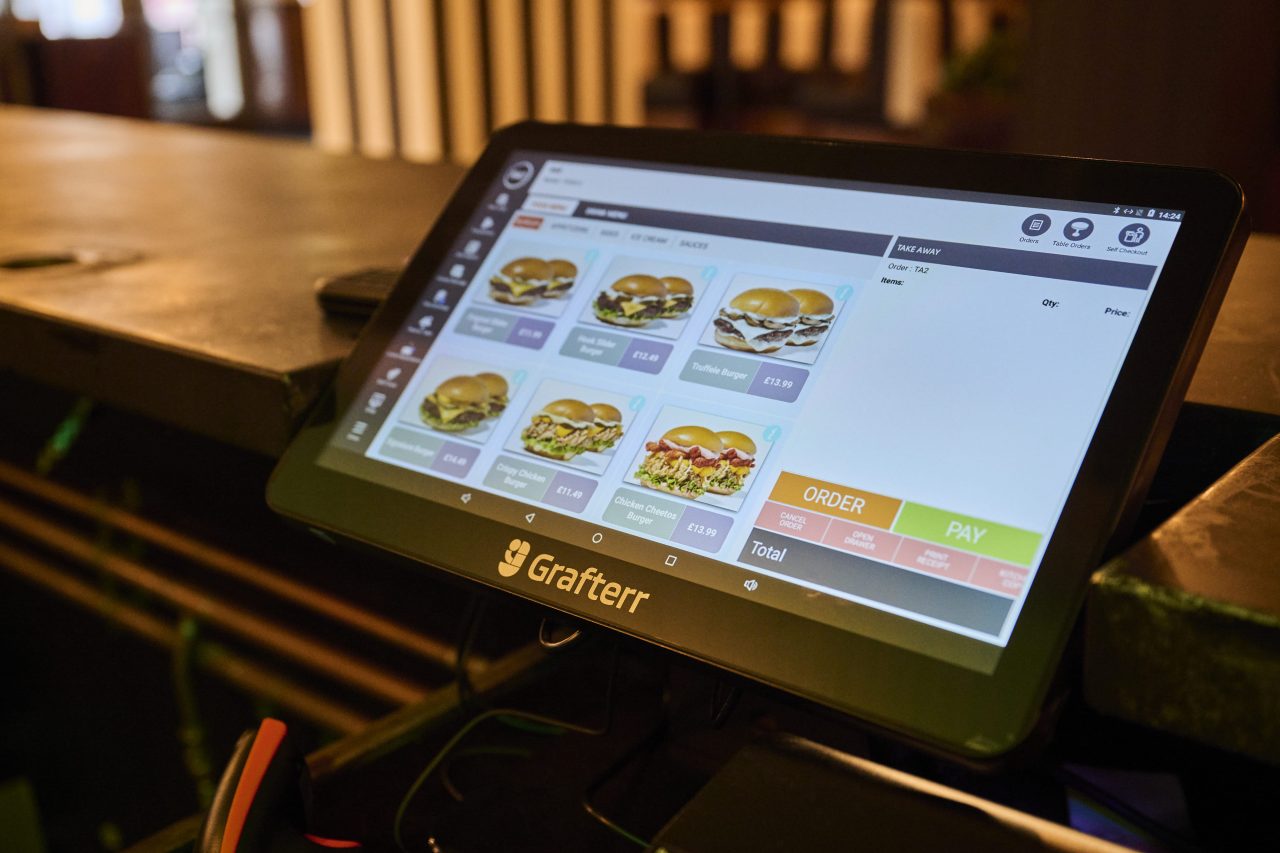
Grafterr integrates several tools into a single platform, making it a genuine all-in-one restaurant operating system. It unifies POS, QR ordering, kiosks, delivery management, loyalty programs, and marketing into a single ecosystem. Restaurants that wish to avoid managing numerous vendors and systems may find it particularly helpful.
Key Features
- Integrated driver management and delivery system that allows restaurants to handle logistics internally without relying on third-party aggregators or platforms.
- Self-service kiosks and QR ordering capabilities that enhance customer experience by enabling faster, contactless, and more flexible ordering options.
- Customer engagement tools and loyalty schemes designed to improve repeat business and build stronger relationships with customers through rewards and promotions.
- Centralised dashboard for menu management and reporting that gives operators full control and visibility across locations and operations.
Pros
- It significantly reduces operational complexity by combining multiple systems into one platform, eliminating the need to manage several vendors and integrations.
- It offers strong cost efficiency for growing restaurants by providing a wide range of features within a single affordable solution.
Cons
- While the platform offers next-day payouts, it does not provide a customer service phone number, which may be a concern for some businesses. However, support is available 24/7 through a ticketing system and email.
2. Flipdish

Flipdish helps restaurants reduce dependency on third-party delivery platforms like Uber Eats and Deliveroo. It does by enabling direct customer ordering through branded websites and apps. It also offers strong marketing tools to help drive repeat orders.
Key Features
- Commission-free online ordering system that allows restaurants to retain full control over their revenue without paying high aggregator fees.
- Marketing automation tools including SMS and email campaigns that support customer retention and repeat purchases.
- Integration with delivery platforms to ensure smooth order fulfilment while still maintaining direct customer ownership.
Pros
- It enables restaurants to increase profit margins by driving direct orders and reducing reliance on third-party delivery platforms.
- It provides strong marketing tools that help businesses build long-term customer relationships and improve repeat order rates.
Cons
- While Flipdish offers a POS system, some advanced restaurant operations may still require additional integrations depending on business complexity.
- It relies on integrations for complete functionality, which can increase complexity and overall costs.
3. Lightspeed

Lightspeed is a powerful EPOS system known for its advanced analytics, inventory management, and scalability. It is widely used by restaurants and hospitality businesses that rely on data-driven decision-making.
Key Features
- Advanced reporting and analytics tools that provide deep insights into sales performance, customer behaviour, and operational efficiency.
- Inventory and supplier management features that help restaurants track stock levels, reduce waste, and manage procurement effectively.
- Strong integrations ecosystem that connects with accounting, delivery, and other third-party tools to extend functionality.
- Multi-location management tools that allow centralised control of menus, reporting, and operations across multiple sites.
Pros
- It provides highly detailed business insights that help restaurants make informed, data-driven decisions and optimise performance.
- It is highly scalable and well-suited for businesses planning expansion or managing multiple locations.
Cons
- The total cost can become high due to additional modules, integrations, and premium features required for full functionality.
- It can be complex to set up and manage, especially for smaller businesses without technical expertise.
4. Square

Due to its ease of use and low upfront cost, Square is one of the most popular entry-level POS systems. It’s a great option for cafés, food trucks, and small takeaway businesses.
Key Features
- Free POS software with a simple and quick setup process that allows businesses to start operating with minimal technical effort.
- Integrated payment processing that enables seamless transactions without needing separate payment providers.
- Basic online ordering capabilities that support simple digital sales channels for small businesses.
Pros
- It is highly affordable and easy to use, making it ideal for startups and small businesses with limited budgets.
- It offers quick deployment and minimal setup, allowing businesses to get started without delays.
Cons
- While it is easy to use and scalable to a certain extent, advanced features and deeper customisation require paid upgrades, which may limit suitability for more complex or large-scale operations.
5. Zonal

Zonal is a long-established UK-based provider known for delivering enterprise-grade hospitality solutions. It is built for complex operations across multiple locations.
Key Features
- End-to-end hospitality management suite covering POS, bookings, loyalty, and back-office operations, along with integrated loyalty and booking systems that enhance customer engagement and streamline reservations.
- Enterprise-level reporting and analytics provide detailed insights for large-scale operations, backed by a strong UK market presence and extensive industry experience.
Pros
- It is highly reliable and trusted by large hospitality groups, offering stability and proven performance at scale while efficiently managing complex, multi-location operations.
Cons
- It is expensive compared to modern cloud-based alternatives and can be overly complex to implement and manage without dedicated training and support.
6. Toast
Toast is a restaurant-focused POS platform designed to improve service speed, order accuracy, and staff efficiency. It offers strong handheld devices and kitchen integrations.
Key Features
- Tableside ordering with handheld devices that improves service speed and enhances customer experience.
- Kitchen Display System (KDS) that streamlines communication between front-of-house and kitchen staff.
- Online ordering and delivery integration that supports both in-house and external order channels.
- Staff and operations management tools that help optimise workforce efficiency and scheduling.
Pros
- It improves operational efficiency by streamlining both front-of-house and kitchen workflows.
- It is specifically designed for restaurants, offering features tailored to hospitality operations.
Cons
- It is closely tied to Toast Payments, which can limit flexibility for businesses that prefer alternative payment providers.
- Costs can increase as additional modules such as marketing, payroll, and advanced tools are added.
7. SumUp

SumUp is a lightweight, affordable solution designed for businesses that need a simple and quick way to accept payments and manage basic operations.
Key Features
- Low-cost hardware and card readers that make it accessible for small businesses with limited budgets.
- Simple POS functionality that covers basic sales and transaction management needs.
- Mobile payment capabilities that allow businesses to accept payments anywhere using smartphones or tablets.
- Easy setup process that requires minimal training and technical knowledge.
Pros
- It is very cheap and simple to use, which makes it perfect for small or temporary food businesses.
- It gives businesses the freedom and mobility they need to run without having to set up complicated hardware.
Cons
- It doesn’t have advanced features like managing inventory, loyalty programs, or in-depth analytics.
- It works best for small businesses or those with only one location, not for restaurant groups that want to grow or have multiple locations.
Choosing the Right Epos Now Alternative
For a restaurant to run smoothly and efficiently, it is important to choose the right EPOS system. Epos Now is still a good choice, but modern restaurants need more than just billing. They need a full system that connects ordering, delivery, and customer service all in one place.
There are so many options that the best one for you will depend on what matters most to you, like cost, ease of use, scalability, or operational control. Some platforms only have basic features, while others have advanced tools to help businesses grow.
Grafterr POS is unique because it offers a true all-in-one solution that includes POS, QR ordering, delivery management, and customer engagement tools all in one place. This cuts down on the number of systems needed, makes operations easier, and gives restaurants more control over their business.
The best EPOS system is one that not only meets your current needs but also helps your business grow in the long term. This will help you work more efficiently, make more money, and give your customers a better experience.