Most hospitality businesses don’t set out to build a tangled web of software. It happens gradually. You start with a basic till, then add a separate app for online orders, another for delivery platforms, a standalone kitchen display, a different tool for stock control, and yet another for staff rotas. Before long, you’re paying for half a dozen subscriptions that don’t talk to each other, and your staff is switching between screens just to get through a single shift.
Grafterr POS was built to solve exactly this problem. Rather than being “just” a till, it’s designed as a single, connected platform that brings the core tools a restaurant, café, bar, or takeaway needs into one place. Here’s a look at how it consolidates what would otherwise be a stack of separate products.
One Platform Instead of a Patchwork of Apps
Grafterr connects your hospitality operations through a single system, keeping everything in sync from end to end. It brings together point of sale, self-service kiosks, online ordering, kitchen management, stock control, and customer engagement, with every tool sharing data in one place. Instead of licensing separate systems for each function and hoping they integrate well enough to be usable, everything runs on the same platform from day one.
This matters because disconnected systems create hidden costs: double data entry, staff training across multiple interfaces, and the risk of information falling out of sync, like a menu price change that updates on the till but not on the online ordering app. A unified platform removes that risk by design.
Point of Sale at the Core
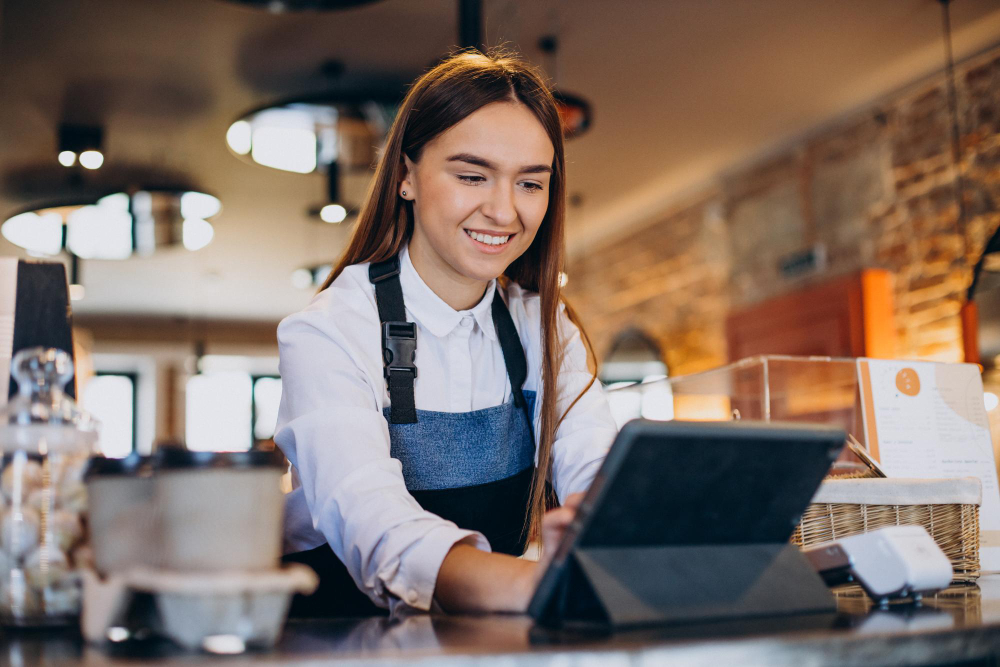
At its foundation, Grafterr POS handles fast order creation with modifiers and notes, table and service management for dine-in venues, staff roles and permissions, digital and printed receipts, and support for printers and other connected devices, all designed to keep service running smoothly during busy periods. Speed is treated as a first-order concern, with the system built to reduce friction during service so staff can take accurate orders quickly even at peak times.
For any food business, the difference between a smooth Friday night and a chaotic one often comes down to exactly this kind of operational speed.
Flexible Payments Without a Separate Processor
Many hospitality businesses end up running their POS and their payment processing as two separate relationships: one company for the till, another for card payments. Grafterr POS instead supports multiple payment flows within the same system: accepting payments directly on supported handheld devices, using Tap to Pay on compatible phones, or connecting external card readers, with every transaction tracked in real time.
This means owners get a single, real-time view of sales and payment activity without needing to reconcile numbers between two different providers a small thing on paper, but a genuine time-saver in day-to-day bookkeeping.
Menus That Update Everywhere at Once
Menu management is another area where separate systems typically cause headaches. Update your prices on the till, and if your online ordering platform is a different tool entirely, someone has to remember to update it there too. With Grafterr, you can create and organise menus using categories, items, modifiers, and pricing. The platform syncs every change across all connected devices, so staff always have the latest menu and pricing during service. The same sync also keeps your online ordering and kiosk channels up to date, as they all run on the same platform.
Beyond the Till: Kiosks, Online Ordering, and QR Tables
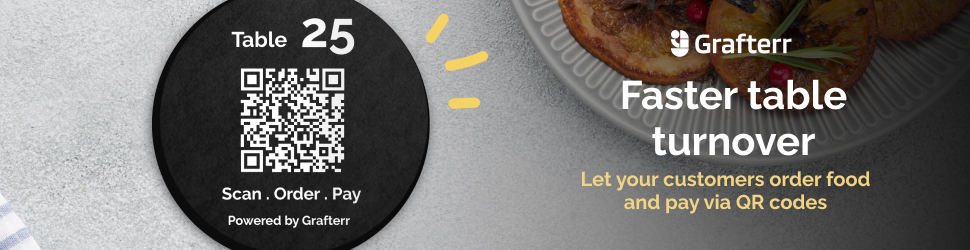
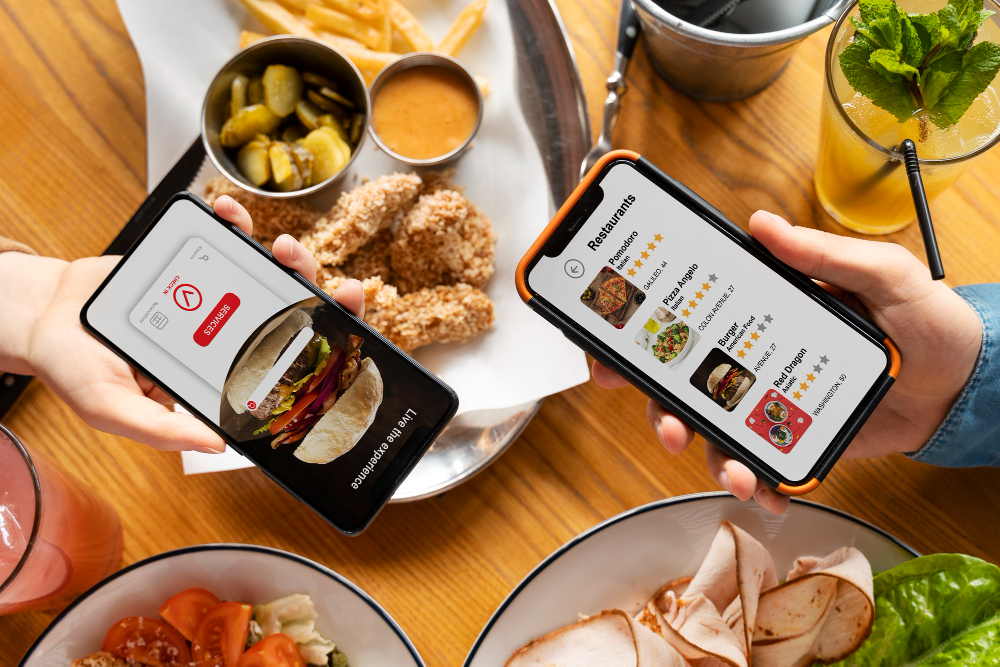
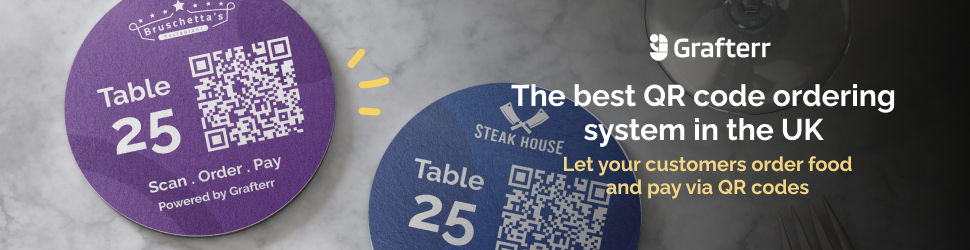
Grafterr POS connects with the wider Grafterr ecosystem, including online ordering, QR order-and-pay for tables, self-service kiosks, kitchen display systems, and integrated payments. Businesses can start with just the POS and add these tools as they grow, without disruption or reconfiguration.
This modular approach matters most for smaller operators. A single takeaway might only need POS and online ordering to start, while a larger multi-site restaurant group might eventually add kiosks and QR table ordering, but because it’s all one platform, expanding doesn’t mean ripping out existing infrastructure or learning a new interface.
Stock Control Down to the Ingredient Level
Inventory is often one of the first things to fall through the cracks when systems don’t talk to each other. Grafterr includes inventory tracking down to the ingredient level, alongside staff management and real-time driver tracking, which helps make workflows more efficient and reduces mistakes. Rather than manually cross-referencing sales against a separate stock spreadsheet, ingredient usage can be tied directly to what’s actually being sold through the POS.
Delivery Management Built In
For takeaways and quick-service restaurants, managing delivery often means switching between several tools, especially when you work with multiple delivery apps. Grafterr brings these operations together in one platform, helping multi-site food and drink operators, including bars, quick-service restaurants, and takeaways, manage their businesses more efficiently. It combines point-of-sale and management functions across locations and includes live delivery tracking as a built-in feature rather than a bolt-on.
Reporting That Reflects the Whole Business
Grafterr POS provides visibility into sales performance, payment activity, and order trends, helping businesses monitor operational performance and spot opportunities to improve efficiency and revenue. Because this reporting draws from every channel dine-in, online, kiosk, and delivery owners get a genuinely complete picture of the business rather than having to manually stitch together reports from separate systems.
Built to Scale Without Starting Over
Whether a business operates a single venue or manages multiple locations, Grafterr POS is designed to support growth while maintaining consistent menus, settings, and reporting across sites. This reflects the platform’s broader focus on the hospitality sector as a whole: restaurants, cafés, food trucks, quick-service restaurants, cloud kitchens, and multi-location chains.
For a growing hospitality business, this scalability matters as much as the day-one feature set. Many operators outgrow their first POS system within a couple of years and face a disruptive migration to something more capable. A platform designed to expand with you rather than one you’ll eventually need to replace avoids that pain.
The Bigger Picture
Grafterr’s broader pitch is a full ecosystem of products that work together, letting operators streamline operations and focus on service rather than managing a patchwork of disconnected tools, backed by ongoing support from setup through daily operations.
For hospitality businesses tired of logging into five different dashboards just to run one shift, that consolidation is the real value proposition: not a single flashy feature, but the simple relief of having your till, payments, menu, stock, delivery, and reporting all speaking the same language because they’re all part of the same system.