Zettle by PayPal is widely used across the UK hospitality market because of its simplicity, low entry cost, and fast setup, especially for cafés, food trucks, and small restaurants that mainly require basic payment processing and simple POS functionality. However, as businesses grow, many operators searching for Zettle alternatives UK restaurants cafés begin to outgrow its limitations, particularly in areas such as table management, kitchen workflows, reporting depth, and multi-location scalability.

Modern restaurants and cafés in 2026 require more than just a payment tool. They need fully integrated systems that combine POS, ordering, delivery, inventory, and customer engagement into one platform that supports both operational efficiency and business growth.
Below are the 7 best Zettle alternatives for UK restaurants and cafés.
1. Grafterr POS

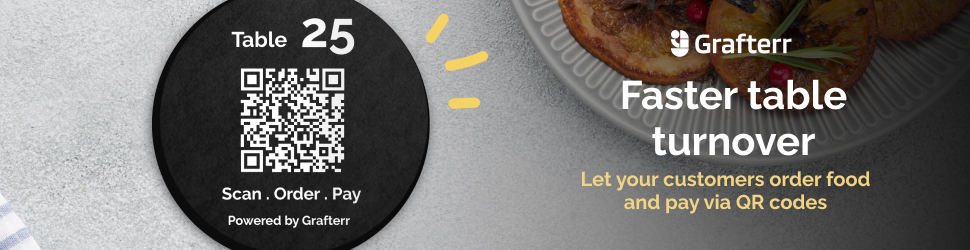
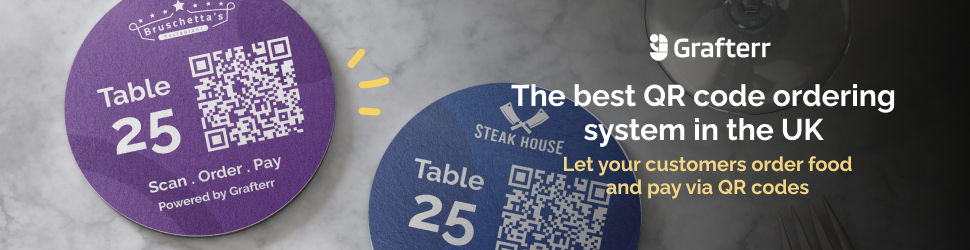
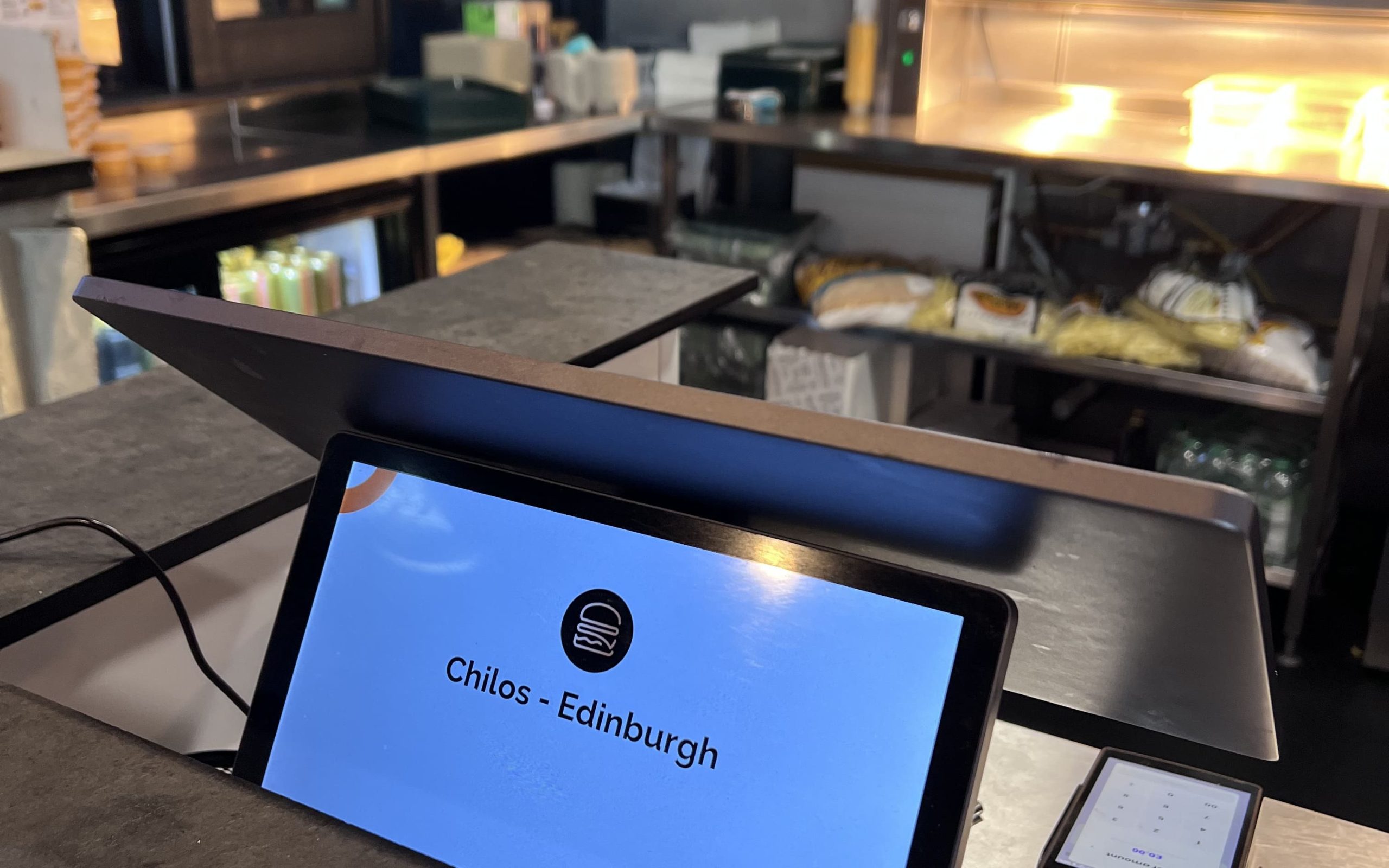
Grafterr POS stands out as the most complete modern replacement for Zettle. Because it delivers a fully unified, cloud-based hospitality platform that combines POS, QR ordering, online ordering, delivery management, payments, and customer engagement into one system, making it ideal for restaurants and cafés that want to scale beyond basic payment tools.
Pros
- It combines all core hospitality functions such as POS, ordering, payments, and delivery into a single platform. This removes the need for multiple integrations and significantly simplifies operations across restaurants and cafés.
- The system is built specifically for hospitality workflows including dine-in, takeaway, and delivery. This ensures smooth coordination between front-of-house, kitchen, and delivery teams during busy service hours.
- It supports multiple revenue streams in one dashboard including in-store, online, and delivery orders. This allows operators to manage all customer interactions in real time without switching systems.
- Pricing is transparent and scalable compared to payment-first systems like Zettle. This makes it suitable for growing businesses that need predictable costs and long-term flexibility.
Cons
- It may not yet match the depth of legacy enterprise integrations used by large hospitality chains.
- The integration ecosystem is still expanding compared to older platforms.
- Advanced enterprise customisation may require additional setup depending on operational complexity.
2. Square POS

Square POS is one of the most widely used alternatives to Zettle, offering a similar ease of use but with stronger scalability, better ecosystem support, and more advanced features for growing restaurants and cafés.
Pros
- Square provides a simple setup similar to Zettle but includes more advanced features such as reporting, staff management, and integrations. This makes it a strong upgrade path for small hospitality businesses.
- It supports both payments and POS functionality in one system. This allows cafés and restaurants to manage transactions and operations without switching platforms.
- The platform offers a wide ecosystem of add-ons including online ordering and delivery integrations. This supports business growth over time.
- It is widely adopted in the UK hospitality market and is known for reliability and ease of use.
Cons
- While more advanced than Zettle, it still requires add-ons for full hospitality functionality.
- It may become costly as businesses scale and require additional features.
- It is not as fully unified as newer all-in-one hospitality platforms.
3. Lightspeed Restaurant

Lightspeed Restaurant is a cloud-based POS system designed for restaurants and cafés that require strong analytics, inventory management, and multi-location control.
Pros
- Lightspeed offers advanced reporting and analytics tools that help businesses track performance across multiple locations. This enables better decision-making and operational control.
- Its inventory and menu management system is highly detailed. This supports cost control, supplier management, and efficient stock tracking for restaurants and cafés.
- The platform integrates with accounting and operational tools. This allows businesses to build a scalable and flexible tech stack.
- It is widely recognised as a leading POS system for hospitality businesses in the UK.
Cons
- Many features require additional paid modules. This increases total cost and complexity over time.
- The system can feel complex for smaller cafés or independent restaurants.
- It does not provide a fully unified all-in-one workflow compared to newer platforms.
4. Epos Now

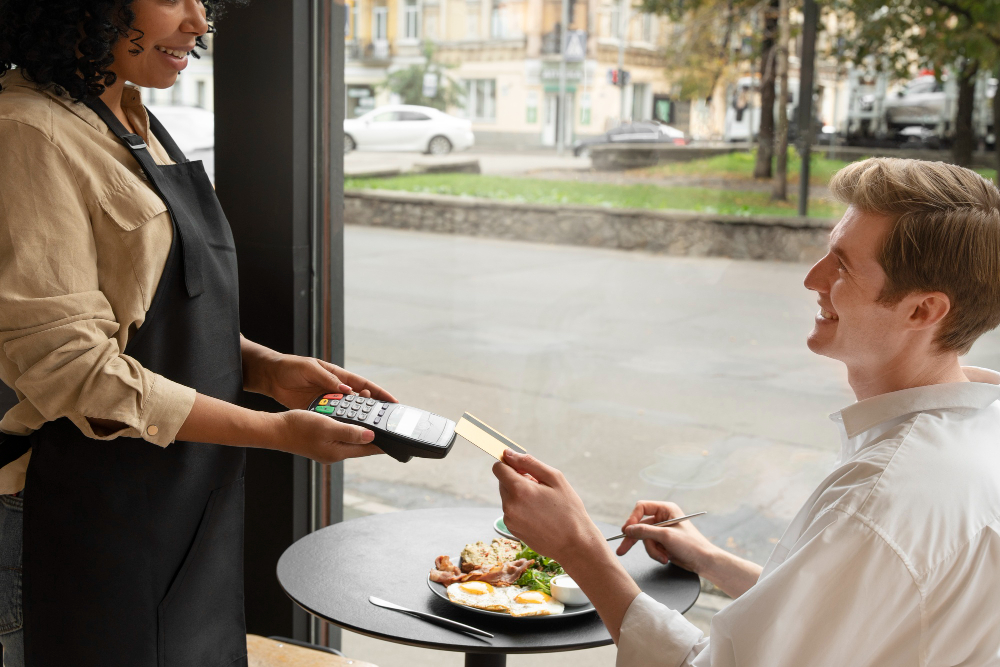
Epos Now is a UK-based POS provider that offers structured hospitality features and strong local support for restaurants and cafés.
Pros
- Epos Now provides inventory tracking, reporting, and operational tools tailored for hospitality businesses. This helps maintain control over daily operations.
- It supports multi-location setups and integrates with accounting platforms and third-party tools. This improves efficiency across business functions.
- The system offers flexible hardware options. This allows businesses to customise their setup based on operational needs.
- Its UK presence ensures local support and familiarity with hospitality requirements.
Cons
- Many advanced features require add-ons. This increases cost and reduces pricing transparency.
- The interface feels less modern compared to newer cloud-native systems.
- Scaling operations can become complex without proper configuration.
5. Toast POS
Toast POS is designed for high-volume restaurant environments where speed, efficiency, and operational performance are critical.
Pros
- Toast delivers strong handheld ordering and kitchen display integration. This improves order accuracy and reduces delays during peak service hours.
- It enables seamless communication between front-of-house and kitchen teams. This improves service flow and customer experience.
- The platform is built specifically for restaurant workflows. This makes it highly effective for fast-paced operations.
- It supports end-to-end restaurant management with a focus on performance and efficiency.
Cons
- Toast is primarily US-focused. This means UK integrations and support are less mature.
- It may not align fully with UK café and hybrid service models.
- Costs can increase significantly with additional modules and services.
6. Clover POS

Clover POS is a hardware-focused POS system that combines payment processing with basic hospitality management features.
Pros
- Clover provides an easy-to-use hardware and software bundle. This allows cafés and restaurants to get started quickly without complex setup.
- It supports essential features such as payments, staff management, and transaction tracking. This makes it reliable for everyday operations.
- The app marketplace allows businesses to extend functionality. This provides flexibility based on operational needs.
- It is widely used for its simplicity and structured design.
Cons
- It lacks advanced hospitality features such as kitchen workflows and delivery management.
- Heavy reliance on third-party apps can create fragmented workflows.
- It is not ideal for scaling multi-location hospitality businesses.
7. SumUp POS

SumUp POS is another payment-first system similar to Zettle, offering simple POS functionality for small hospitality businesses.
Pros
- SumUp offers low-cost entry and simple setup. This makes it ideal for small cafés and takeaway businesses starting out.
- It supports mobile payments and basic POS functionality. This allows businesses to operate quickly without technical complexity.
- The system is easy to use and requires minimal staff training.
- It is suitable for small-scale hospitality operations with simple needs.
Cons
- It lacks advanced features such as kitchen management, detailed reporting, and multi-site control.
- It is not suitable for growing restaurants that require deeper operational tools.
- It remains a payment-focused solution rather than a full hospitality platform.
Final Insight
Zettle remains a strong entry-level solution for small cafés and simple counter-service businesses, but its limitations become clear as hospitality operations grow more complex than those of its alternatives.
The UK hospitality market in 2026 is clearly shifting toward cloud-based, all-in-one platforms that unify POS, ordering, delivery, and customer engagement into a single ecosystem, allowing businesses to operate more efficiently and scale without relying on multiple systems.
Among all alternatives, Grafterr stands out as the best Zettle alternative for UK restaurants and cafés, offering the most balanced combination of functionality, scalability, and simplicity for modern hospitality businesses.